
 Braskem Global
 Braskem Idesa
 Braskem USA
 Braskem Europe




Integration among industry, brands, and cooperatives drives plastic recycling in Brazil
The circular economy gains momentum in the country, fueled by progress in the recycling value chain, regulatory pressure, and increased use of recycled plastics by industry
The circular economy has been gaining scale in Brazil and is becoming a strategic priority for industry. According to a recent survey by the Brazilian National Confederation of Industry (CNI), six out of ten Brazilian manufacturers have already adopted circular economy practices, primarily through recycling. The combination of regulatory advances, the technical maturation of the value chain, and growing demand for sustainable solutions has accelerated investments in recycling.
The sector's progress is also reflected in data from the 2025 Recycling Yearbook, published by the Sustainable Pathways Institute (ICS), which reports a 69% increase in the number of waste picker organizations between 2019 and 2024, along with a steady expansion in the volume of recovered waste over the period. In 2024 alone, the sector generated more than BRL 2 billion in economic activity and potentially contributed to reducing 1.83 million tons of CO² equivalent emissions, reinforcing the strategic role of recycling in both the circular economy and Brazil's climate agenda.
At the forefront of this conversation within the petrochemical sector, Braskem has strengthened its circularity strategy through multiple initiatives. These include Wenew, the company's circular economy ecosystem encompassing recycled resin sales and recycling technologies; Cazoolo, a circular packaging design lab focused on co-creating packaging designed for recyclability from inception; as well as structural investments in recycling cooperatives through the Ser+ program, and environmental education initiatives targeting end consumers.
The Wenew initiative brings together investments in both mechanical and chemical recycling, development of post-consumer recycled (PCR) resins, projects aimed at improving packaging recyclability, and efforts to strengthen the recycling value chain. In 2024, Braskem sold approximately 85,000 tons of resins containing recycled content. On the downstream end, in 2025, more than 41,000 tons of plastic waste were recovered through recycling and consumer engagement initiatives.
According to Yuri Tomina, Circular Economy Leader for Braskem in South America, the advancement of recycling in Brazil depends on coordinated action across all stakeholders in the value chain. "Scaling recycling in the country requires alignment among all actors across the product lifecycle. And this process begins at the packaging design stage, since decisions made at this point directly impact recyclability, sorting efficiency, and the material's potential for reuse," he says.
This coordination is already materializing in market case studies that demonstrate the technical feasibility of PCR at scale. In the home appliances sector, partnerships with Electrolux Group (shrink films) and Mondial (audio components) validate the safety and durability of recycled materials. Similarly, in the flexible packaging market, Kimberly-Clark has incorporated around 20% post-consumer resin into the packaging of some of its personal care products. Beyond ensuring demand through market adoption, the recycling value chain also depends on strengthening cooperatives responsible for sorting and recovering waste, as they supply the raw materials essential to the circular economy.
Strong socioeconomic impact
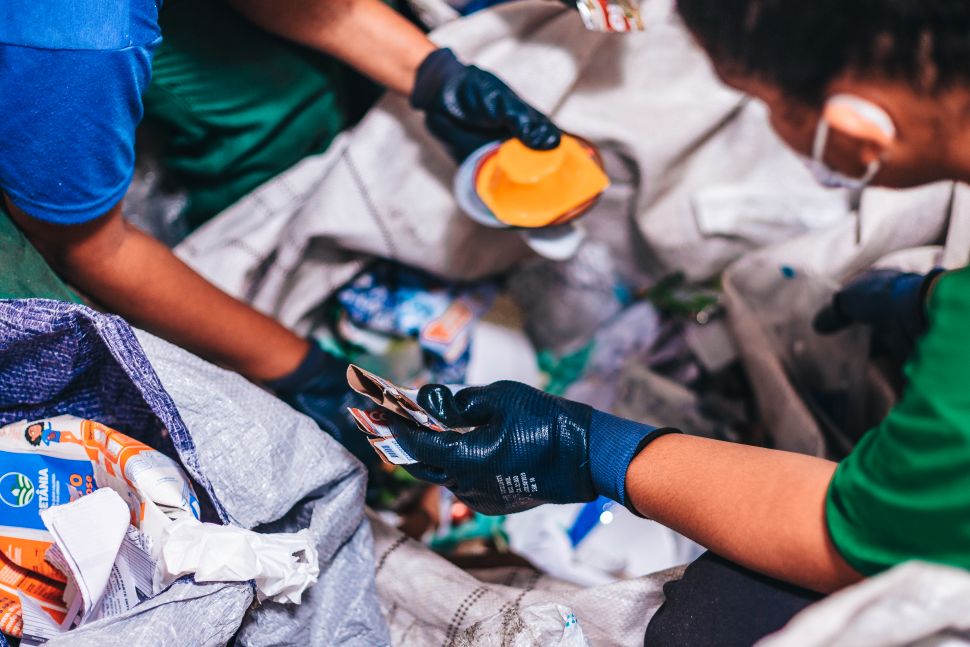
Since 2009, Braskem has operated the SER+ Program, an initiative focused on the professional development and socioeconomic inclusion of recycling cooperatives. In 2025, the program benefited 679 waste pickers and supported 23 cooperatives, resulting in more than 3,868 tons of sorted plastic and over BRL 1 million invested in infrastructure, training, and operational improvements.
"Today, we carry out highly refined sorting across more than 30 types of materials to ensure market value. The biggest challenge remains the complexity of certain types of packaging, which hinders recyclability and increases waste rejection rates," says Tereza Montenegro, President of Cooperativa Viva Bem and a participant in the SER+ Program. According to the 2025 Recycling Yearbook, plastic accounts, on average, for 42% of volume and 55% of cooperatives' revenue. For this reason, initiatives such as Cazoolo play an important role in improving the quality of plastic waste and, consequently, increasing the availability of recycled-content raw materials.
The advancement of the circular economy in Brazil is also driving discussions around reverse logistics, recyclability, and shared responsibility among industry, brands, consumers, and public authorities-topics that are expected to gain even greater relevance in the coming years.
For more information related to press, please contact:
LLYC
imprensa.braskem@llyc.global

Se você é um profissional da imprensa, a Braskem tem um canal feito só pra você.
Acesse aquiPress Releases
More news
Braskem, 3M and MagSac develop packaging for hearing protectors with 50% post-consumer recycled resin

Braskem's I'm greenT bio-based, a global sustainability benchmark, celebrates 16 years of production

NR-1 Drives Companies to Turn Mental Health into a Management Practice

Logistics chain mobilization expands support network to prevent child sexual exploitation on highways

Braskem supplies renewable-based solution for Innovak's new sustainable and circular mattress line

Braskem's Cazoolo Lab Cuts Circular Packaging Development Time in Half and Has Connected More Than 1,100 Companies in Four Years
Customers
Become a Braskem customer
Braskem is one of the largest suppliers of chemical and petrochemical products in the world, recognized for its focus on sustainable development, innovation and quality.
We believe in lasting partnerships, we have a broad portfolio of products and we work together with our customers to create new practical and sustainable solutions in all markets.
Talk to our sales team