 EN


Inventory Preserves the Intangible Cultural Heritage of Maceió Neighborhoods
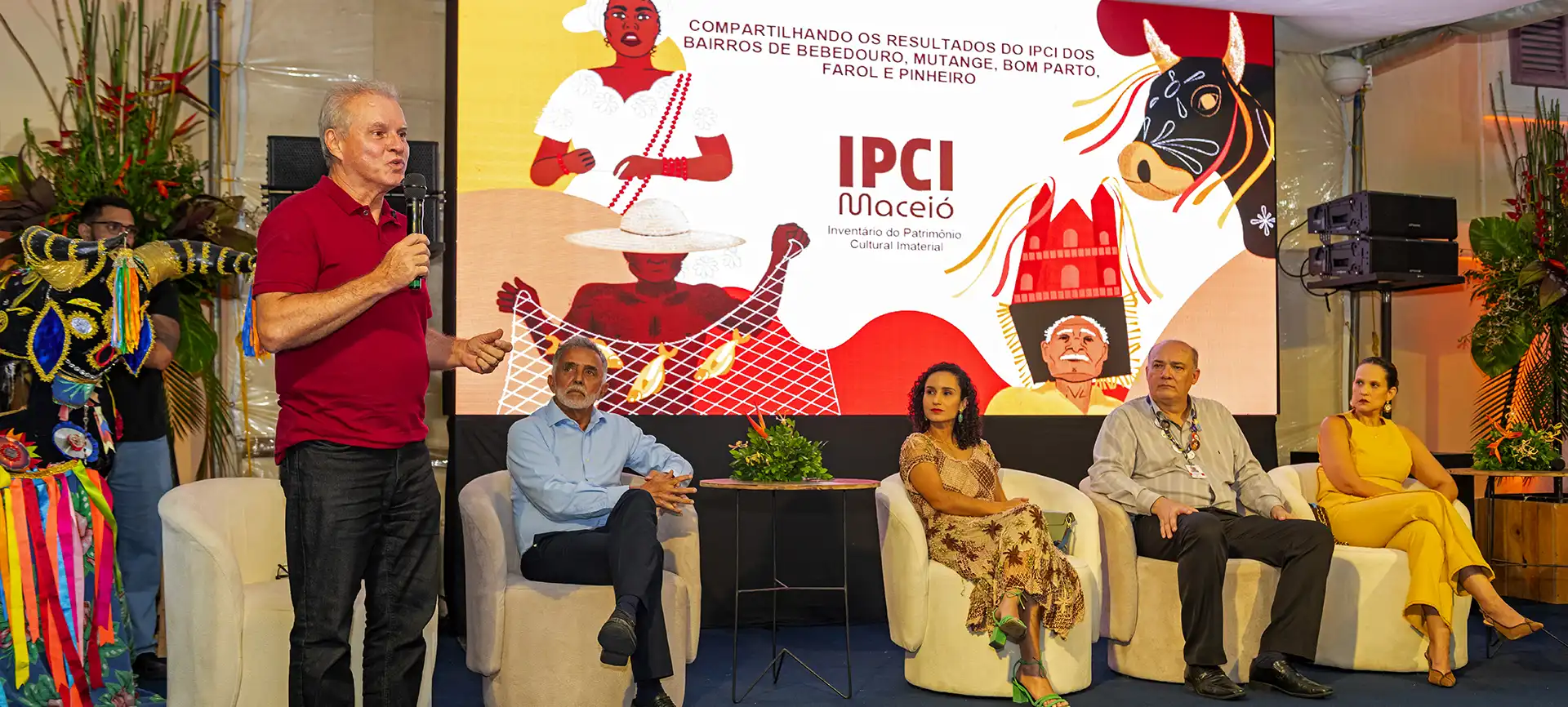
Collection available on Iphan's platform brings together information on cultural practitioners and cultural sites in the vacated areas of Bebedouro, Mutange, Bom Parto, Pinheiro, and Farol .
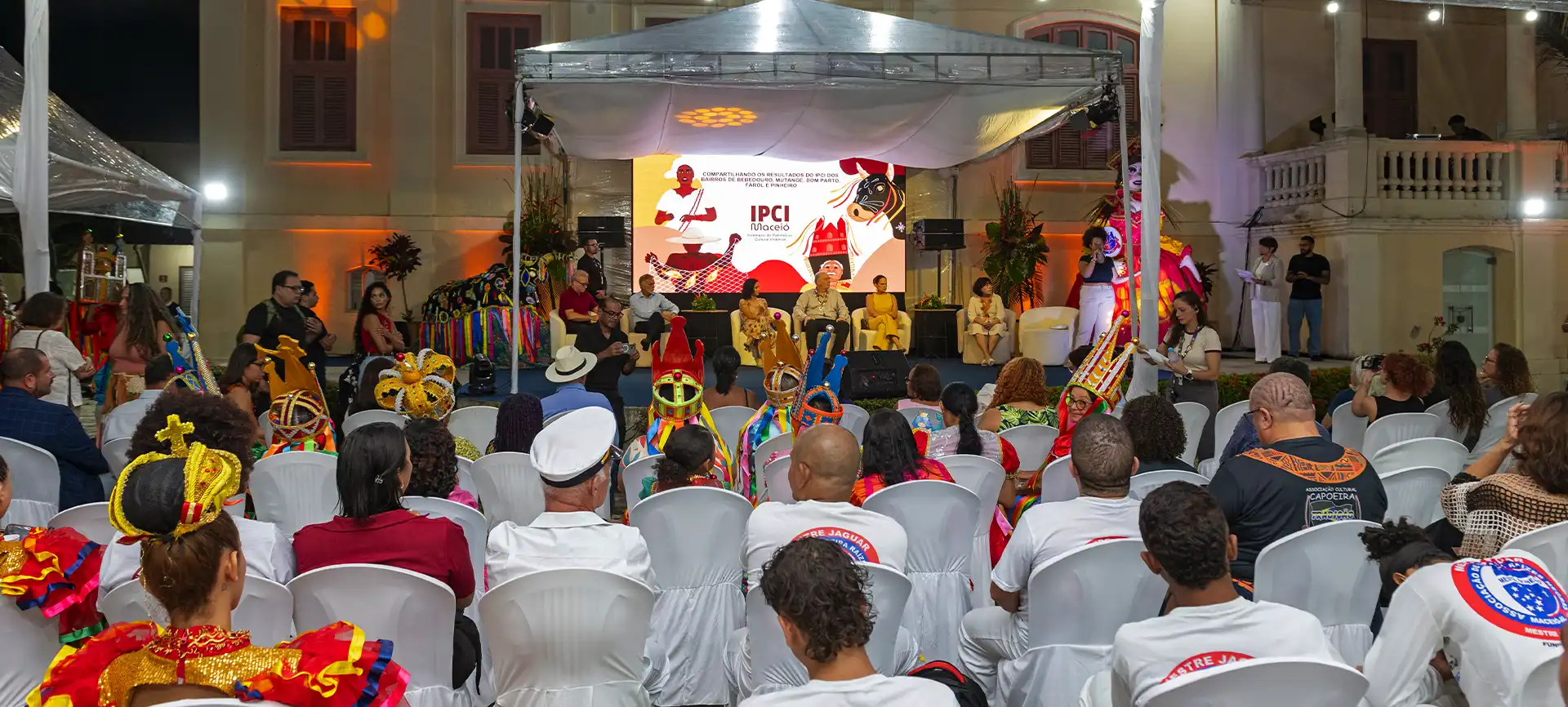
Maceió, October 8, 2026 - The cultural memory of communities relocated from the neighborhoods of Bebedouro, Mutange, Pinheiro, Bom Parto, and Farol has been preserved through the Participatory Inventory of Intangible Cultural Heritage (IPCI). Officially launched on Wednesday (October 7) at the Théo Brandão Museum in downtown Maceió, the collection includes documents, photographs, and audiovisual records of traditional cultural expressions from the vacated areas. It is available free of charge on the digital platform of the National Inventory of Cultural References (INRC), maintained by the National Institute of Historic and Artistic Heritage (Iphan). Click here to access the collection.
The IPCI is one of the initiatives delivered under the Socio-Urban Action Plan (PAS), established as part of the Socio-Environmental Agreement signed between Braskem and public authorities. The inventory, which mapped 332 cultural practitioners and 75 cultural references, was developed under the technical leadership of the Federal University of Alagoas (UFAL), with support from the University Foundation for Extension and Research Development (Fundepes) and oversight by Iphan, in accordance with the National Safeguarding Policy.
"This partnership between Braskem, UFAL, and Fundepes was established to recover and preserve cultural heritage, and we are now presenting what had never been documented before. The inventory opens an important door to documenting other cultural expressions in Alagoas that have never received this kind of special attention," said UFAL President Professor Josealdo Tonholo.
According to Braskem's Social Initiatives Coordinator, Alfredo Zanon, the partnership lends credibility to the independent work carried out to develop the IPCI. "UFAL is an institution with highly qualified researchers, and developing the inventory in partnership with cultural practitioners who formerly lived in the vacated areas or were involved in their cultural traditions is an important requirement for recognition of the cultural community," he said.
Inventory Development
The IPCI was developed by a multidisciplinary team of architects, anthropologists, historians, geographers, and social scientists, with active community participation. The team identified and documented intangible cultural references associated with everyday life in the neighborhoods, including local knowledge and practices, and analyzed how the relocation process affected the production and transmission of this cultural heritage.
In addition to reviewing existing literature and documents, the team conducted field research from May 2024 to September 2025. The starting point was identifying individuals who had kept cultural traditions alive in the neighborhoods until 2018, the year that marked the onset of land subsidence.
The selection of community-based cultural research agents prioritized former residents of the vacated areas, who received training from Iphan and technical support from UFAL. Using tools such as census questionnaires, qualitative interviews with cultural practitioners, and participatory mapping, the team documented 413 cultural heritage assets, including places of cultural significance, forms of expression, celebrations, traditional occupations and practices, buildings, objects, and local cultural organizers.
The IPCI also mapped 453 places of cultural significance, including locations in neighborhoods such as Flexais, Chã de Bebedouro, and Chã da Jaqueira.
Luiz Antônio dos Santos Silva, known as Mestre Meinha, relocated the Capoeira Tradição do Farol Cultural Association to Barro Duro. "My home was always open to many students, and we used to study the ancestral roots of capoeira. Today, we continue that work in another neighborhood, but preserving our history is extremely important," he said.
Historian Clair Júnior, a member of the IPCI research team, emphasized that community participation was what truly set the project apart. "We made this a priority from the very beginning. We conducted a selection process and invited cultural practitioners and former neighborhood residents to join us in building this body of knowledge, which added tremendous value to the project," he explained.
As a result of the research, the IPCI produced six technical reports and a set of 57 safeguarding proposals, including specific guidelines and recommendations. The proposed measures include establishing a Reference and Memory Center, recognizing traditional cultural masters through the Living Heritage Registry, and granting official recognition to the Feast of Saint Anthony of Padua and Guerreiro Alagoano as intangible cultural heritage of the municipality of Maceió and Brazil, respectively.
About the PAS
Established under the Socio-Environmental Agreement signed by the Federal Public Prosecutor's Office (MPF) and Braskem, with the participation of the Alagoas State Public Prosecutor's Office (MPAL) and the Municipality of Maceió as a signatory, the Socio-Urban Action Plan (PAS) encompasses initiatives such as the construction or renovation of daycare centers, markets, public squares, and healthcare facilities, as well as measures addressing cultural, social, economic, and urban development needs. Some of these initiatives are implemented by Braskem, while others are carried out by Maceió's local government. The updated budget, funded by the company, is approximately BRL 260 million.
About Braskem
Braskem develops chemical and plastic solutions that are part of millions of people's everyday lives. As a global petrochemical company, it connects different segments of the value chain and works alongside customers, suppliers, and communities to create shared value. Its portfolio of plastic resins and chemical products serves industries such as packaging, construction, mobility, healthcare, hygiene, agribusiness, and manufacturing. Braskem is committed to increasing plastic circularity and expanding the use of renewable-source materials, guided by the belief that innovation and collaboration are essential to building a more sustainable future. At the same time, the company strives to conduct its operations responsibly, strengthen dialogue, and contribute to the development of the communities where it operates. With operations in Brazil, the United States, Mexico, and Germany, Braskem exports to more than 71 countries and remains committed to ethics, compliance, and responsible competitiveness.