
 EN
EN


Closure techniques
LEARN ABOUT THE TECHNIQUES ADOPTED FOR
THE DEFINITIVE CLOSURE OF THE WELLS
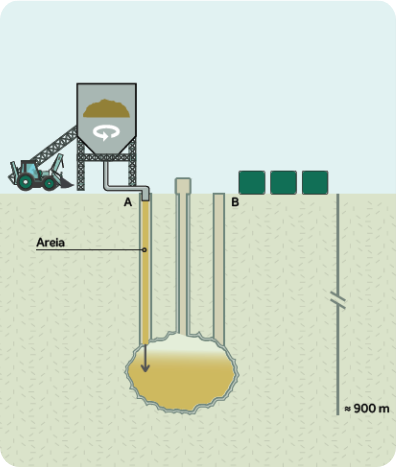
Certain wells are filled with sand mixed with saline water extracted from the cavities. This process involves placing the sand and saline water mixture so that it settles uniformly inside the cavity. This is done until the cavity is completely filled. Afterwards, the wells are plugged with cement.
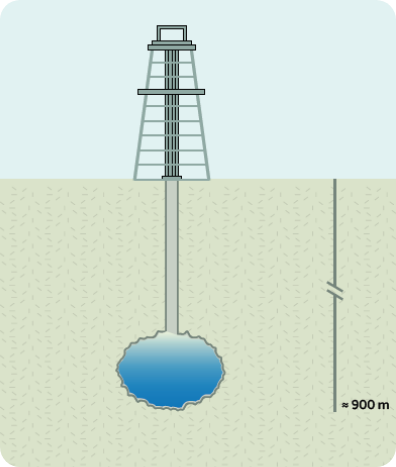
One method of closing the cavities involves the natural pressurization of the brine already inside them, a process akin to what occurs in a hermetically sealed space. This pressurization is monitored using a piezometer, a device that tracks the cavity's pressure and temperature. It can be installed via the original well or new access.
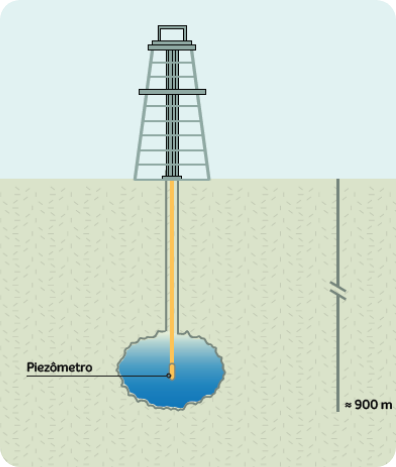
The piezometer is placed in the well. After technical analyses, when pressurization is confirmed, the well in which the piezometer was installed is plugged with cement.
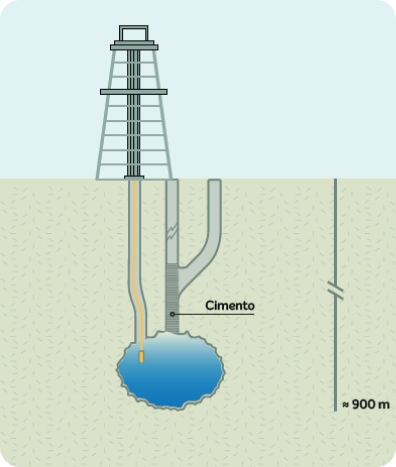
When the original access to the cavity is obstructed, two new wells are created. Installation of the piezometer is done via one of them. On the other hand, the cement is injected into the blocked well. When stability is confirmed, the well in which the piezometer was installed is plugged.
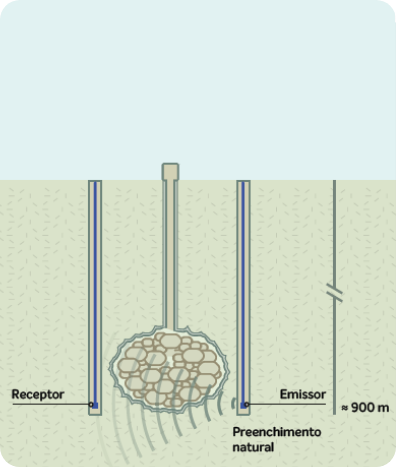
Geophysical studies indicated that some cavities were naturally filled. First, sonar and microgravimetry analyses were conducted. In situations where obtaining images through the method mentioned earlier was not feasible, seismic tomography was conducted. This involved creating two accesses: one for installing a wave-emitting device and another for a receiver. Following the analysis of various geophysical studies, it was confirmed that natural closure had occurred, and no additional action was required. Subsequently, the well is plugged with cement.