




Search for Products Team Sustainability Applications Catalogs

Sustainability

An ecosystem to keep carbon in the cycle

Combating climate change and eliminating plastic waste are at the core of our journey toward a more sustainable future.

For this reason, we offer products designed to keep carbon in the cycle for longer, minimizing environmental impact, promoting a more responsible value chain, and creating value for companies and people.

In alignment with Braskem's sustainability strategy, the Specialty Chemicals business plays a key role in developing and offering solutions with lower environmental impact, contributing to the advancement of the segment's goals.

Discover the solutions that contribute to a low-carbon economy.

Unlike the mass balance operating model, in this case there is no mixing of different types of raw materials within production assets. Therefore, when a renewable source is used, the new carbon (also identified as renewable or C14) contained in it can be measured throughout all stages of the process.

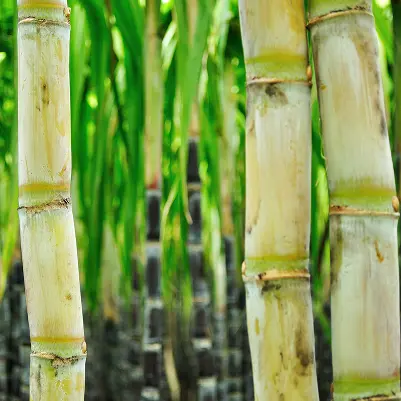
For example, renewable solutions can be made from biomass such as sugarcane, which captures carbon from the atmosphere during its growth, contributing to the reduction of greenhouse gas emissions.

I'm green™ bio-based

I'm green™ bio-based PE Wax

I'm green™ bio-based Polyethylene (PE) Wax is a product with a lower carbon footprint because it is sourced from sugarcane, a responsibly produced biomass that captures carbon throughout its growth.

Brazil is a pioneer in the use of sugarcane in fuels and as a raw material for the chemical industry. With sustainable and regenerative practices — resulting from more than 50 years of experience and investments in research and development — the sector continues to grow robustly, focusing on productivity and the mitigation of environmental impacts.

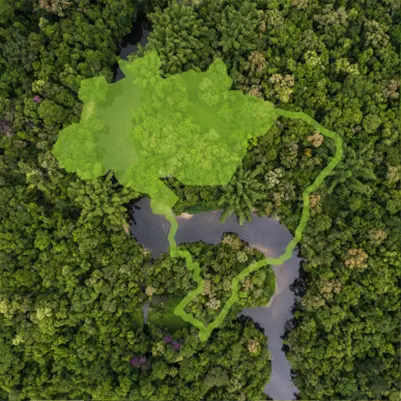
Sugarcane cultivation contributes to the restoration of degraded areas, without impacting native or protected vegetation, including the Amazon. Today, its production is concentrated in southeastern Brazil, more than 2,000 km from the Amazon rainforest.

  • 95 %

    of the expansion of sugarcane production

    is taking place on degraded pastures.

  • 1 %

    of Brazil's territory

    is dedicated to sugarcane production. This represents 3% of the country's arable land.

After being processed, one of the byproducts of sugarcane is bagasse, which can be used to generate electricity for the mill itself during the production of sugar and ethanol. In some cases, excess energy can be sold back to the grid.

As it grows, sugarcane captures CO₂ from the atmosphere. By producing waxes using sugarcane-based ethanol instead of fossil-based raw materials, approximately 4 kg of CO₂ emissions are avoided per kilogram of wax.

+2.76(2) Fossil-based
wax
I'm green™ bio-based PE wax -1.55(1)
I'm green™ bio-based PE wax has a negative carbon footprint
  1. Braskem I'm green™ bio-based polyethylene wax. The number may vary depending on the wax grade. Contact a specialist to learn more .
  2. Equivalent to polyethylene wax produced with 100% European fossil PE (RER) – ecoinvent v3.10.

Chemically identical to its fossil-based equivalent, Braskem's I'm green™ bio-based polyethylene waxes are used in a wide range of applications, from cosmetics to adhesives, masterbatches, and much more.

Click here to explore our portfolio
 

Responsible Ethanol Sourcing

Braskem recognizes the importance of promoting sound social and environmental practices across its value chain. To achieve this, we have a program designed to ensure integrity and sustainable practices in the sugarcane production chain, promoting continuous improvement in supplier management.

Learn more about the Program

Certifications

Braskem's certifications demonstrate the company's commitment to developing, producing, and marketing products and delivering services with quality, while respecting the environment and people.

  • Bonsucro is a global leader in promoting sustainability in the sugarcane industry.

    With a focus on climate action, human rights, and value across the supply chain, Bonsucro certification ensures that the entire chain — from origin to final product — meets rigorous sustainability standards.

  • ISCC is a leading certification system that supports sustainable, transparent, deforestation-free, and climate-friendly supply chains, from raw material cultivation to the final product. As one of the largest global certification systems, ISCC aims to ensure that the entire chain meets its strict environmental, social, and economic standards.

Environmental Impact

Our purpose is to transform people's lives through sustainable chemistry and plastic solutions, by analyzing impacts across the value chain. To achieve this, we strive to operate in alignment with sustainable development principles, guiding our strategy to address global trends and challenges.

Life Cycle Assessment (LCA)

This is a systematic approach to evaluating the environmental impacts of a product — or service — throughout its entire life cycle, including raw material extraction, production, transportation, use, and disposal.

Our studies follow the ISO 14040 and ISO 14044 standards, and some undergo external review (ISO 14071) to ensure transparency, consistency, and accuracy.
Carbon Footprint

One of the categories assessed in LCA focuses on measuring greenhouse gas (GHG) emissions. This allows Braskem to measure the carbon footprint of our I'm green™ bio-based portfolio.

A product's carbon footprint (also known as Product Carbon Footprint – PCF) is the total quantification of greenhouse gas (GHG) emissions associated with all stages of its life cycle, expressed in CO2 equivalent (CO2e).

LCA and carbon footprint calculations play a fundamental role in guiding decision-making processes and promoting responsible and more sustainable practices.

Contact a technical specialist to learn more

ESG

At Braskem, integrating environmental, social, and governance factors into our business is an essential part of how we create value. Our actions are guided by a global policy that directs decisions, defines responsibilities, and adopts best practices in governance and compliance.

Discover our Sustainable Development strategy